





Jump to Section

- Understanding Presbyopia
- Reading Glasses: Pros And Cons
- Lasik For Presbyopia: What To Know
- How Lasik Compares To Reading Glasses
- Who Is A Good Candidate For Lasik?
- Understanding The Risks
- Which Is Right For You?
- Why Walpole Patients Choose Nielsen Eye Center
- About Walpole, Ma
- Getting To Our Norwood Office From Walpole
Somewhere around your 40s, menus, phone screens, and fine print start drifting further from your face before you can read them comfortably. That shift, called presbyopia, happens to nearly everyone with age, and it leaves most people weighing the same question: stick with reading glasses, or look into LASIK? Here’s how the two options compare for Walpole patients considering their choices.
Understanding Presbyopia
Presbyopia occurs as the eye’s natural lens gradually becomes less flexible over time, making it harder to shift focus between distance and close-up vision. Unlike nearsightedness or farsightedness, presbyopia is progressive. It continues to change for years, which is an important factor in deciding how, and when, to address it.
Reading Glasses: Pros and Cons
- Pros: low upfront cost, no procedure or recovery time, and an easy prescription update as your eyes continue to change.
- Cons: needing to keep a pair within reach, switching glasses for distance versus reading (or adjusting to progressives), and updating your prescription as presbyopia progresses.
LASIK for Presbyopia: What to Know
LASIK can be one option for some patients with presbyopia, often using a monovision approach, where one eye is corrected for distance and the other for near vision, or a blended vision approach targeting a similar effect. This is different from LASIK for younger patients correcting nearsightedness or farsightedness alone, and not every presbyopia patient adapts well to monovision, so a trial with contact lenses is often recommended before committing to surgery.
- Pros: many patients reduce their day-to-day dependence on reading glasses; results vary by individual, and not everyone reaches full independence from glasses.
- Cons: surgical risks apply, some patients don’t adapt well to monovision, and because presbyopia continues to progress, you may still need reading glasses again at some point down the road, even after LASIK.
How LASIK Compares to Reading Glasses
LASIK works differently than reading glasses in that it reshapes the cornea itself rather than adding external correction in front of the eye. It does not reverse the lens changes that cause presbyopia in the first place, so it should be thought of as a way to reduce dependence on glasses for many patients, not a permanent fix for how the eye ages. Reading glasses, contacts, and other procedures like PRK remain valid options as well, and the right choice depends on your eyes, your lifestyle, and your comfort with each approach.
Who Is a Good Candidate for LASIK?
Good candidates for LASIK generally have a stable prescription, healthy corneas, and no other significant eye conditions that would affect healing or results. Age, corneal thickness, and overall eye health all factor into candidacy, and not every patient is a candidate, including some who may be better suited to PRK or another approach. A full evaluation is the only way to know for sure.
Understanding the Risks
As with any surgical procedure, LASIK carries risks. These can include infection, dry eye, glare or halos around lights (particularly at night), under-correction or over-correction that may need a follow-up enhancement, and, less commonly, other complications that can affect vision. We review your individual risk profile in detail during your consultation, before any decision is made.
Which Is Right for You?
If you’re comfortable with reading glasses and don’t mind keeping a pair handy, there may be no pressing reason to consider surgery. If you’re finding glasses genuinely inconvenient for your work or lifestyle and you’re comfortable with the idea of a surgical procedure and its risks, LASIK may be worth exploring further. Either way, the best next step is a conversation with our team about your specific eyes and goals.
Why Walpole Patients Choose Nielsen Eye Center
- Serving Greater Boston patients since 1991, including presbyopia-specific LASIK evaluations
- 11 physicians and optometrists, so you can explore LASIK, PRK, or simply updated glasses within the same practice
- A nearby Norwood office and a LASIK self-test to help you start thinking through candidacy
Call our Norwood office at 617.471.5665 or schedule a consultation to talk through reading glasses, LASIK, and everything in between.
About Walpole, MA
Walpole is a Norfolk County town about 18 miles south of Boston, first settled in 1659 and incorporated in 1724 after being part of Dedham. The town grew up around mills along the Neponset River and today balances that industrial history with a strong suburban character.
Francis William Bird Park, an 89-acre landscaped park with walking paths and streams, and Blackburn Hall, a community events venue since 1929, are two of Walpole’s better-known landmarks. Whether you’re reading a book at Bird Park or checking a menu at a Walpole Center restaurant, comfortable near vision makes daily life easier, which is exactly what this comparison comes down to.
Getting to Our Norwood Office From Walpole
Our Norwood office is about 5 miles from Walpole, typically a 10-minute drive via MA-1A, depending on traffic.
Nielsen Eye Center – Norwood Office
95 Chapel Street, Suite 1A
Norwood, MA 02062
Phone: 617.471.5665
Disclaimer
This article is provided for general informational and educational purposes only and does not constitute medical advice. It is not intended to diagnose, treat, cure, or prevent any condition, and should not be used as a substitute for a consultation with a qualified physician. Individual results, candidacy, and outcomes vary from patient to patient, and no specific result is guaranteed. Reading or interacting with this content does not create a physician-patient relationship with Nielsen Eye Center or any of its physicians. If you are experiencing a medical emergency, call 911 or seek care at your nearest Emergency department.
Statements regarding patient satisfaction, visual outcomes, or recovery timelines reflect general trends reported by our practice and/or published clinical literature and are not a guarantee of results for any individual patient. Outcomes depend on each patient’s unique anatomy, health history, and adherence to post-procedure care, and will be discussed in detail during a personalized consultation.
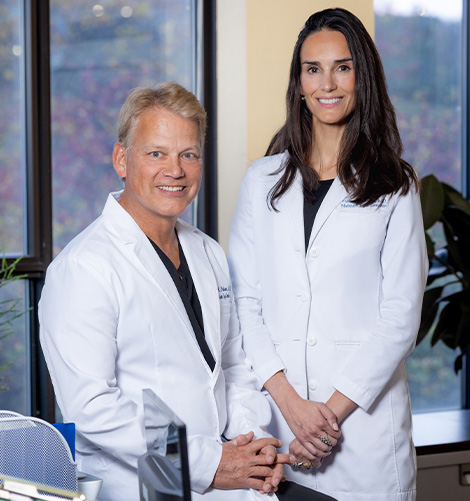
Ready to Experience Clearer Vision?
Discover the life-changing benefits of LASIK at Nielsen Eye Center. Our experienced surgeons are ready to guide you through your journey to clearer vision.
Schedule Your Consultation
